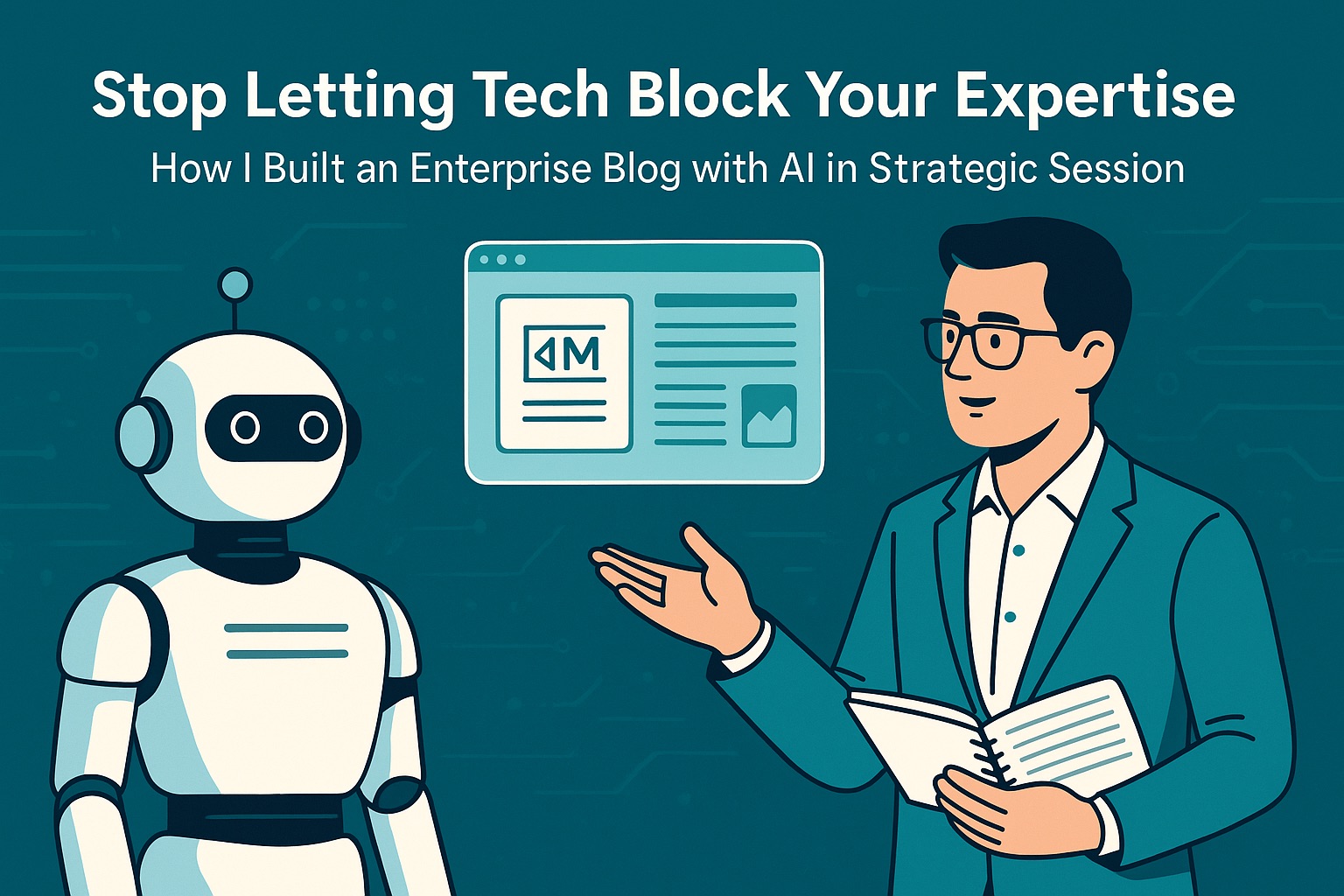
Stop Letting Tech Block Your Expertise: How I Built an Enterprise Blog with AI in One Strategic Session
Summary:
Subject matter experts have invaluable knowledge trapped behind terrible blogging platforms. Here’s how I used AI strategically to build enterprise-grade infrastructure so I could focus on what I actually do best.
Unfortunately, most domain experts avoid sharing knowledge because they don’t want to wrestle with WordPress chaos or learn complex static site generators.
Why this matters
You’re brilliant at what you do. Whether it’s ERP systems, cloud architecture, data analysis, or any specialized domain, you’ve solved problems that others are struggling with right now. Your experience could save someone weeks of frustration.
But there’s one thing stopping you: technical blogging platforms that fight you every step of the way.
The WordPress nightmare hits every technical professional. Plugin conflicts break things randomly. Constant updates trigger compatibility chaos. Performance bloat makes sites painfully slow. The real killer? Writing becomes torture when you want clean Markdown for technical content but WordPress mangles code blocks.
The static site generator trap is worse. Learning curves eat billable hours. Configuration complexity has nothing to do with your expertise. Maintenance overhead never ends.
The real tragedy? While you’re debugging technical issues, people in your industry are making the same costly mistakes you’ve already solved. Your knowledge stays locked in your head.
The good news is AI can solve this infrastructure problem once and for all.
Step 1 - Be laser-specific about your domain requirements
Don’t say “help me build a blog.” That’s too vague and you’ll get generic results.
Instead, be precise: “Create a Markdown-based technical blog optimized for Business Central content, using my GitHub workflow, with automated quality gates and zero maintenance overhead.”
The AI needs your domain context and specific requirements to build something useful for your field. Give it everything upfront: your content structure preferences, quality standards, workflow requirements, and success criteria.
This isn’t about learning new technology. It’s about applying your professional judgment to system design.
Step 2 - Apply your professional standards, not hobby-level thinking
I didn’t learn web development. I applied ERP discipline and enterprise thinking.
Quality gates: Dynamic test suite that automatically validates everything from content structure to SEO compliance.
Systems thinking: Structured workflows with 5 specialized templates for different content types.
Maintainability: Clean architecture with no plugin chaos or technical debt.
Usability: Tools that teams actually adopt and use consistently.
Use the professional standards you already apply in your day job. Your domain expertise is the superpower here, not your coding skills.
Most people approach this backwards. They learn the technology first, then try to apply it to their domain. That’s why they end up with generic solutions that don’t fit their actual workflow.
Step 3 - Build infrastructure once, create content forever
What I expected: A basic static site for sharing occasional posts.
What I actually got: A comprehensive content management system that rivals enterprise solutions.
Dynamic test suite with comprehensive validation that adapts to your content structure. Dual CI/CD pipelines with quality gates and automated deployment. 5 specialized post templates for tutorials, troubleshooting, best practices, reviews, and general content. Interactive workflow system that guides content creation from draft to publication. Zero maintenance overhead.
The smart testing system uses dynamic content discovery. It automatically adapts validation based on what you actually build. It checks everything from Jekyll builds and SEO compliance to accessibility standards and performance metrics.
I write in Markdown. I publish in seconds. I maintain nothing.
The workflow is simple:
./blog.shAn elegant menu appears:
- Create new blog post
- Get writing assistance for existing draft
- Polish and optimize content
- Generate hero image prompts
- Publish ready post
The wizard guides you through each step, handling templates, asset directories, quality guidelines, and production-ready metadata. No command-line parameters to remember.
This leads to the real payoff: I went from dreading the publishing process to writing effortlessly. No more fighting with technology. No more broken workflows. No more technical debt consuming my time.
My Business Central expertise now reaches people who can actually use it, instead of staying locked in my head. Every solution I share prevents someone else from struggling with the same challenges.
Your action plan
Define your domain requirements
What types of content do you create? Tutorials, case studies, troubleshooting guides, best practices? What quality standards matter in your field? How do you prefer to work? What does success look like for your content?
Leverage AI strategically
Be extremely specific about your domain expertise and content requirements. Front-load comprehensive context about your field and audience needs. Demand enterprise-grade solutions with proper testing, not hobby-level implementations.
Apply your professional standards
Use the same quality thinking you apply to client projects. Demand automation for repetitive tasks that waste your time. Insist on maintainable, scalable solutions that work long-term.
Focus on content, not technology
Once the infrastructure exists and works reliably, forget about the technical details. Write consistently about what you know best. Share the proven solutions you’ve developed through real-world experience.
The best time to start sharing your expertise was when you first solved a difficult problem that others struggle with. The second-best time is right now, with AI tools that actually work with your professional workflow instead of against it.
Your industry needs your knowledge. The people facing the exact problems you’ve already solved are searching for your insights. Don’t let another year pass fighting with inadequate technology when you could be making a real impact.
The infrastructure barrier has been eliminated. The question now is: what will you teach the world?
Have questions about building your own AI-powered content system or want to discuss knowledge sharing strategies? Feel free to reach out via LinkedIn or Twitter. I’d love to hear about the expertise you’re ready to share and help you overcome any remaining barriers.
See the AI’s perspective on our collaboration for detailed technical implementation insights and lessons learned.